The Comprehensive Overview to Recognizing the Uses of the AI Agents Marketplace
The AI agents marketplace represents a substantial change in exactly how companies can improve their procedures. By using a variety of AI services, this marketplace addresses numerous organizational requirements, from automating jobs to boosting decision-making. The integration of these agents is not without its challenges. Understanding the ins and outs of this marketplace is vital for businesses aiming to continue to be affordable. What elements should organizations take into consideration before taking on AI agents?
What Are AI Agents and Their Key Functions?
AI agents are innovative software programs developed to do tasks autonomously or semi-autonomously, leveraging expert system modern technologies. These agents make use of formulas and information to communicate with their setting, choosing based on predefined criteria or found out experiences. Secret functions of AI agents include their capacity to procedure large quantities of data swiftly, facilitating real-time decision-making. They commonly include equipment learning capabilities, enabling them to adapt to new information and improve their performance over time.
AI agents can operate in numerous domains, from customer solution chatbots to intricate information analysis tools. Their scalability allows them to handle multiple jobs all at once, enhancing efficiency. Additionally, many AI agents have natural language processing capacities, which boost human-agent interaction. In general, the flexibility and intelligence of AI agents make them valuable properties across industries, driving technology and improving operational efficiency.
Exploring the Different Kinds Of AI Agents
The landscape of AI agents encompasses various classifications that highlight their distinctive capabilities. Each kind of AI agent offers one-of-a-kind use situations and applications, varying from customer care automation to complicated information evaluation. Understanding these classifications is crucial for leveraging the complete potential of AI agents in varied sectors.
Classification of AI Agents
While innovation advancements, the classification of AI agents has become progressively crucial to recognize their diverse functionalities and applications. AI agents can be categorized into numerous types based upon certain criteria. Responsive agents, as an example, operate exclusively based upon the existing situation, lacking any memory of previous experiences. On the other hand, deliberative agents utilize inner designs to plan and choose notified by previous interactions. Another classification focuses about freedom levels, comparing semi-autonomous and completely self-governing agents. Additionally, agents can be classified according to their objective, such as individual aides, customer support robots, or data analysis tools. This structured classification helps users and programmers recognize the right AI agents for their requirements and facilitates reliable release in numerous settings.
Usage Situations and Applications
Understanding the various classifications of AI agents leads the means for discovering their functional applications and make use of situations across different industries. In health care, AI agents assist in diagnosis and person monitoring, optimizing treatment plans and improving individual end results. In financing, they simplify procedures through automated trading, fraud detection, and customized client solution. Retail companies take advantage of AI agents for stock monitoring, sales forecasting, and enhancing customer experiences via chatbots. In production, AI agents enhance supply chains, monitor equipment, and improve manufacturing effectiveness (AI Agents Marketplace). Additionally, in education and learning, they help with individualized knowing experiences, adjusting to individual trainee demands. These diverse applications illustrate the transformative capacity of AI agents, highlighting their importance in driving innovation and performance across various fields
Applications of AI Agents in Numerous Industries
Advantages of Incorporating AI Agents Into Company Procedures
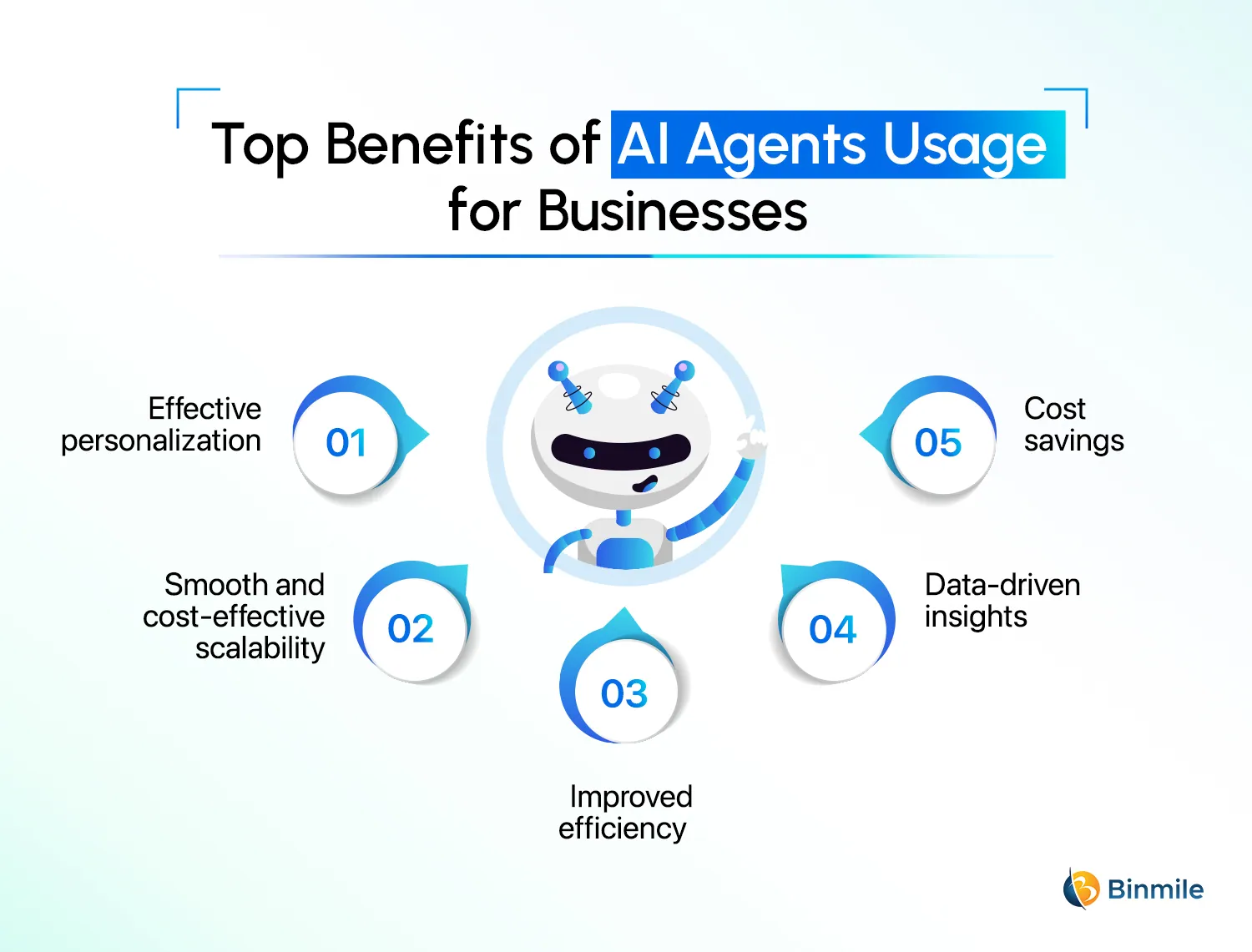
Integrating AI agents into business procedures can greatly improve efficiency and performance, specifically when organizations accept their capacities to automate routine jobs and maximize workflows - AI Agents Marketplace. By leveraging AI, business can markedly minimize hand-operated labor, allowing workers to concentrate on tactical efforts that drive development

In addition, AI agents assist in improved communication and collaboration amongst teams, streamlining procedures and ensuring that info moves seamlessly across divisions. The scalability of AI solutions enables services to adjust rapidly to altering needs, making them extra resilient in an unforeseeable market. Inevitably, the integration of AI agents fosters innovation and boosts overall organizational performance, placing organizations for long-term success.
Obstacles and Considerations in Executing AI Agents
While the benefits of AI agents in improving organization operations are clear, several difficulties and considerations have to be addressed during application. Organizations commonly encounter technical difficulties, including assimilation with existing systems and information compatibility. The top quality of data used to educate these agents plays a crucial role in their performance; bad data can lead to suboptimal performance.
In addition, services have to navigate ethical factors to consider, such as prospective biases in AI decision-making and the effects of task displacement. Regulatory conformity is one more significant element, as companies must comply with information security and personal privacy legislations.
Lastly, the demand for continuous maintenance and updates can strain sources, calling for a proficient workforce to manage and enhance AI agents successfully. Resolving these obstacles is crucial for successful AI representative execution, ensuring that the innovation serves its intended function without unpredicted problems.
The Future of AI Agents and Arising Fads
The future of AI agents guarantees a transformative influence on various markets, driven by rapid advancements in innovation and developing individual needs. As device understanding algorithms end up being extra sophisticated, AI agents are expected to display enhanced abilities, consisting of boosted all-natural language processing and psychological knowledge. This evolution will assist in a lot more instinctive communications in between customers and AI systems, fostering higher trust and dependence on these devices.
Emerging fads show a change in the direction of hyper-personalization, where AI agents will assess individual choices to find this supply customized experiences. Additionally, the integration of AI agents with Internet of Things (IoT) devices will certainly develop seamless environments that optimize everyday tasks and decision-making processes.

Ethical factors to consider bordering AI usage will get prominence, prompting programmers to focus on transparency and accountability. As these fads unravel, the AI agents marketplace will likely expand, providing diverse applications throughout industries such as medical care, financing, and education and learning, eventually improving just how businesses operate and involve with consumers.
Regularly Asked Questions
Exactly How Can I Select the Right AI Agent for My Demands?
Selecting the right AI representative needs assessing specific demands, evaluating features, and why not find out more considering compatibility with existing systems. Looking into user testimonials and testing alternatives can also help in making an informed choice that aligns with goals.
Are There Any Type Of Legal Effects When Using AI Agents?
The usage of AI agents carries possible legal effects, including concerns of obligation, copyright, and information privacy. Users need to recognize guidelines and compliance demands to reduce risks linked with releasing these modern technologies successfully.
What Is the Price Range for AI Agents in the Marketplace?
The expense variety for AI agents in the marketplace varies substantially, normally spanning from a few hundred to several thousand dollars, depending upon elements such as complexity, performance, and the certain demands of the customer.
How Do I Examine the Efficiency of an AI Representative?
To evaluate the performance of an AI representative, one need to consider accuracy, efficiency, versatility, and individual satisfaction. Evaluating these variables via metrics and user feedback provides a complete understanding of the representative's efficiency.
Can I Personalize AI Agents for Certain Jobs or Industries?
Personalizing AI agents for particular tasks or sectors is practical, permitting customers to customize capabilities and actions. This flexibility improves effectiveness, guaranteeing that the AI lines up with distinct functional requirements and sector-specific needs.